Faster Access to Innovative Medicines in the BeNeLux
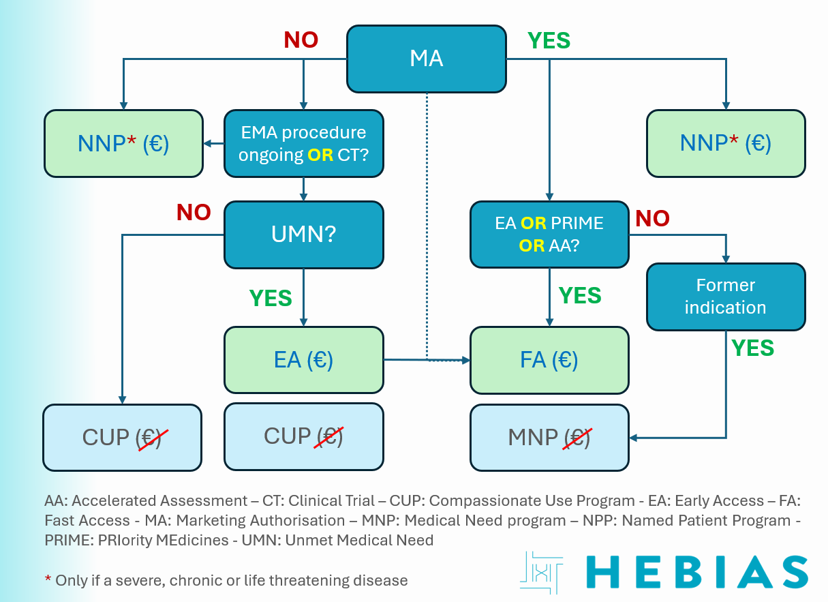
Innovative medicines are evolving one after another at an accelerating pace, yet for patients, access can still feel slow and unequal. Across the BeNeLux countries, different systems exist to bridge this gap, each with its own logic, rules, and pitfalls. In this blog, we take you through Belgium, the Netherlands, and Luxembourg, and explain how […]
Managing Uncertainty via Deterministic Sensitivity Analysis

Simulating the financial impact of introducing a new technology inherently involves uncertainty. As a result, the central outcome should be seen as an indicative reference for decision-makers who must assess whether the implementation of the new technology aligns with its clinical added value. In one of our previous blogs (“How to Deal with Uncertainties“), we […]
Incidence versus prevalence in economic studies

Some of our clients struggle with “incidence” and “prevalence”, specifically their application in budget impact analysis (set up of a patient flow). Based on our daily analyses, we are happy to share our insights. To start, both concepts must be well understood. We will illustrate them using patients with a specific condition, for example, patients […]
AI in Healthcare: Risks and Opportunities

No one involved in healthcare, including the patient, can ignore it any longer. Artificial intelligence (AI) is deeply embedded in modern healthcare and is evolving rapidly. AI has already provided added value in the clinical interpretation of medical imaging, identification of chronic conditions based on algorithms, and much more. In short, thanks to AI, our quality of […]
Indirect Medical Costs

HTA bodies should take indirect (medical) costs into account to assess the cost/benefit-ratio of life sciences innovations HTA bodies may request the inclusion of indirect medical costs when 2 therapeutic options are compared by means of a health economic assessment. The methodology to include indirect medical costs differs from the classic inputs in a health […]