1. Introduction: A changing Market Access landscape
The pharmaceutical market access landscape in Europe is undergoing a significant transformation.
Healthcare systems face a common challenge: how to ensure timely access to innovative medicines while maintaining the financial sustainability of healthcare expenditure.
Scientific innovation is accelerating. Advanced therapies, personalised medicine, treatments for rare diseases and increasingly targeted oncology medicines are creating new therapeutic opportunities. At the same time, these innovations often come with substantial treatment costs, uncertainty regarding long-term outcomes and increasing demands on healthcare budgets.
For pharmaceutical companies, this creates a more complex market access environment. Demonstrating clinical efficacy is essential, but increasingly insufficient on its own. Decision-makers also expect convincing evidence of therapeutic added value, cost-effectiveness and budgetary sustainability.
Meanwhile, European cooperation is changing the traditional market access model. The implementation of the European Health Technology Assessment Regulation and the renewed ambitions of the Beneluxa Initiative are creating opportunities for greater collaboration between countries.
For Belgium, the Netherlands and Luxembourg, these developments raise an important strategic question:
Are traditional country-by-country market access strategies still sufficient, or is the future moving towards a more integrated regional approach?
2. European HTA reform: A new starting point
One of the most important developments in European market access is the implementation of Regulation (EU) 2021/2282 on Health Technology Assessment. This regulation is applicable since 12 January 2025 and targets to reduce duplication between national HTA assessments and create a more consistent European approach to evaluating clinical evidence via the introduced Joint Clinical Assessments (JCA). Recently, the first JCA approved specialties obtained in July 2026 market access in Germany and Austria while market access in the other EU countries is expected soon (status November 2026).
The initial EU HTA scope covers new oncology medicines and advanced therapy medicinal products (ATMPs). The scope will progressively expand to other medicinal products. Under the new framework, participating Member States jointly assess the relative clinical effectiveness and safety of relevant medicines.
However, an important distinction remains.
European harmonisation of clinical assessment does not mean harmonisation of pricing and reimbursement decisions.
National authorities remain responsible for determining how clinical evidence translates into their own healthcare systems. This includes economic evaluation, budget impact, willingness to pay, pricing and reimbursement decisions. [health.ec.europa.eu]
For pharmaceutical companies, this creates both opportunities and challenges. On the one hand, a JCA can reduce duplication and provide a common clinical evidence foundation.
On the other hand, differences in national healthcare priorities, comparators, economic evaluation methods and affordability considerations will continue to influence reimbursement outcomes.
Consequently, market access planning needs to become increasingly integrated. Companies should anticipate European evidence requirements early in clinical development while preparing country-specific economic and reimbursement strategies.
Of note: Hebias is expertised in PICO scoping which supports the company to pave the way towards market authorisation via joint HTA as well in the preparation of the national submission files, incl. medical writing, value positioning and economic analysis in parallel with the JCA process.
3. Beneluxa: from cooperation to strategic Market Access
Regional collaboration is becoming increasingly relevant, particularly for smaller European markets. The Beneluxa Initiative on Pharmaceutical Policy brings together five countries (Belgium, The Netherlands, Luxembourg, Austria and Ireland).
Its ambition is to improve patient access to medicines through international cooperation, including joint horizon scanning, health technology assessment and pricing and reimbursement collaboration. A particularly interesting development occurred in 2026.
Beneluxa identified 17 medicines in development that could be suitable for closer cooperation between participating countries. The concerned companies are invited to contact the Beneluxa secretariat (info@beneluxa.org) to discuss a joint pilot.
Depending on the product, this could involve joint (HTA) assessments eventually followed by joint price negotiations. [x] Camizestrant was one of these and is assessed by both the Dachverband der Sozialversicherungsträger (DSV) in Austria and the NIHDI in Belgium in close collaboration with the Belgian Health Care Knowledge Centre (KCE) and became published on November 16 2026.
This represents an important evolution.
Rather than waiting until individual national reimbursement applications have been submitted, participating countries are exploring opportunities for collaboration earlier in the product development and market access process.
Previous examples demonstrate that this approach can work.
Belgium and the Netherlands jointly assessed and negotiated nusinersen in 2018. Belgium, Ireland and the Netherlands subsequently collaborated on the assessment and negotiations for atidarsagene autotemcel, reaching a common pricing agreement in January 2024. [lisah.org]
The introduction of European Joint Clinical Assessments does not eliminate the need for Beneluxa. Instead, it potentially changes its role.
With clinical assessments increasingly coordinated at European level, regional cooperation can focus more strongly on the remaining national and economic questions including managed entry agreements and financial risk-sharing arrangements.
The strategic question is therefore no longer simply whether countries should collaborate. It is how this collaboration can translate into faster, more predictable and sustainable patient access.
4. Three countries, three Market Access realities
Despite increasing European and regional cooperation, Belgium, the Netherlands and Luxembourg continue to operate under different reimbursement systems.
Understanding these differences remains essential for pharmaceutical companies and is part of the DNA of Hebias to support companies which want to bring innovation towards the patients in an affordable way.
Belgium: Balancing innovation and budgetary sustainability
In Belgium, the NIHDI plays a central role in pharmaceutical reimbursement The Commission for Reimbursement of Medicines (CTG/CRM) evaluates applications for inclusion in the reimbursed medicines list.
Its assessment considers both clinical and economic dimensions. [riziv.fgov.be], [riziv.be]
The economic dimension is becoming particularly important. The Belgian global pharmaceutical budget for 2026 amounts to approximately €6.8 billion. This illustrates the considerable financial importance of pharmaceutical expenditure within the compulsory health insurance system. (see former blog: Belgium’s Healthcare Budget: Who Decides, How Is It Calculated, and What Does It Mean for Innovative Medicines?)
At the same time, Belgium is introducing initiatives to improve access to innovative medicines.
Since 1 March 2026, new early-access and rapid-access programmes (EEFA) have been operational for medicines addressing unmet medical needs. These programmes introduce additional opportunities for temporary reimbursement under specific conditions.
For pharmaceutical companies, the Belgian environment increasingly requires a combination of robust clinical evidence, convincing economic arguments and a clear understanding of the national reimbursement framework.
The Netherlands: A strong emphasis on value and affordability
The Dutch reimbursement system places considerable emphasis on demonstrating that medicines provide sufficient value relative to their costs.
Zorginstituut Nederland (ZiN) plays a central role in advising the Ministry of Health, Welfare and Sport on reimbursement decisions. For expensive hospital medicines, the so-called lock procedure is particularly relevant.
Medicines may temporarily be excluded from the basic healthcare package while their therapeutic value, cost-effectiveness and appropriate price are evaluated.
The procedure can apply when expected national expenditure reaches at least €20 million annually, or when annual costs exceed €10 million and treatment costs exceed €50,000 per patient.
This illustrates the importance of demonstrating both clinical value and economic sustainability.
The Netherlands also operates the Medicines Reimbursement System (GVS) for outpatient medicines, alongside its national maximum-price framework. For pharmaceutical companies, this means that pricing, reimbursement and economic evidence need to be considered together from an early stage.
Luxembourg: A smaller market with specific characteristics
Luxembourg represents a different market access environment. The Caisse Nationale de Santé (CNS) is a central institution in the reimbursement system.
The national positive list determines which medicines are reimbursed and under which conditions. Each month, the list becomes updated and provides an overview of reimbursable medicines and their reimbursement conditions. [cns.public.lu], [cns.public.lu]
As a relatively small healthcare market, Luxembourg has specific characteristics.
The limited size of the patient population, the economic implications of introducing innovative treatments and the importance of international pharmaceutical market developments create particular challenges and should not simply be treated as an extension of the Belgian or Dutch market.
A dedicated understanding of its reimbursement framework remains necessary.
5. The economic challenge: Innovation versus affordability
Across the BeNeLux, one fundamental challenge remains consistent:
How can healthcare systems finance innovation without compromising their long-term financial sustainability?
This question becomes particularly relevant for high-cost treatments, advanced therapies and medicines targeting small patient populations. Traditional reimbursement assessments increasingly need to address several dimensions simultaneously.
How to position the new technology versus existing treatment options and is this benefit in balance with the incremental costs over short and longer time? And how reliable are the available assumptions regarding treatment duration, patient numbers, survival and real-world effectiveness?
These questions are closely interconnected.
This is particularly relevant for advanced therapies, where a relatively small patient population can generate significant expenditure. Consequently, pharmaceutical companies increasingly need robust health economic models to support reimbursement applications.
Furthermore, managed entry agreements and outcome-based reimbursement arrangements may provide opportunities to address uncertainty and distribute financial risk between manufacturers and healthcare payers.
The challenge is to move beyond the traditional question of whether a medicine is clinically effective.
The broader question is whether its clinical and economic value can be demonstrated within the financial and organisational realities of each healthcare system.
6. What does this mean for pharmaceutical companies?
The evolving European and regional environment requires pharmaceutical companies to rethink their traditional market access strategies.
Hebias identified five strategic priorities.
- Earlier Market Access Planning
Market access considerations should be integrated into clinical development rather than addressed only after marketing authorisation. Early preparation can help align clinical endpoints, comparators and evidence generation with future HTA requirements.
- Integrated BeNeLux Strategies
Companies should increasingly consider Belgium, the Netherlands and Luxembourg as interconnected markets.
A coordinated regional strategy can improve consistency and efficiency. However, national reimbursement requirements and healthcare priorities must remain central to implementation.
- Stronger Health Economics Capabilities
Economic evidence is becoming an increasingly important component of reimbursement discussions. Robust budget impact models, cost-effectiveness analyses and transparent scenario assumptions can strengthen the credibility of market access submissions.
- Evidence Generation Beyond Clinical Trials
Clinical trial data remain fundamental, but real-world evidence can provide additional insights into treatment effectiveness, patient outcomes, resource utilisation and long-term economic consequences. This may become particularly important for medicines where uncertainty remains at the time of reimbursement.
- Strategic Pricing and Reimbursement
Pricing decisions in one country may have implications for other markets.
International reference pricing (IRP), regional negotiations and different reimbursement arrangements require a coordinated approach. Companies need to understand these interactions before making important launch and pricing decisions. We invite all readers to download the free guide ‘Market Access in Belgium’ to achieve more insights in pricing references.
7. The Hebias perspective: Building a future-proof Market Access strategy
At Hebias, we believe that the future of Market Access will depend on the ability to combine European evidence requirements, regional cooperation and national reimbursement realities.
We see four strategic pillars as essential.
Clinical Value
Demonstrating meaningful therapeutic added value through robust clinical evidence which will become integrated in strong qualitative reimbursement dossiers written by experienced medical writers.
Economic Value
Quantifying cost-effectiveness, budget impact and the long-term economic consequences of introducing innovative treatments. Hebias supported more that 150 HEOR dossiers since 2018 and became a trusted partner to triple A companies.
Regional Alignment
Identifying opportunities for cooperation between Belgium, the Netherlands and Luxembourg, while anticipating developments within the broader Beneluxa framework.
National Execution
Translating regional strategies into effective national reimbursement submissions, pricing approaches and market access solutions.
These four dimensions should not operate independently.
They need to be integrated into a coherent market access strategy throughout the product lifecycle.
Our proposed guiding principle is:
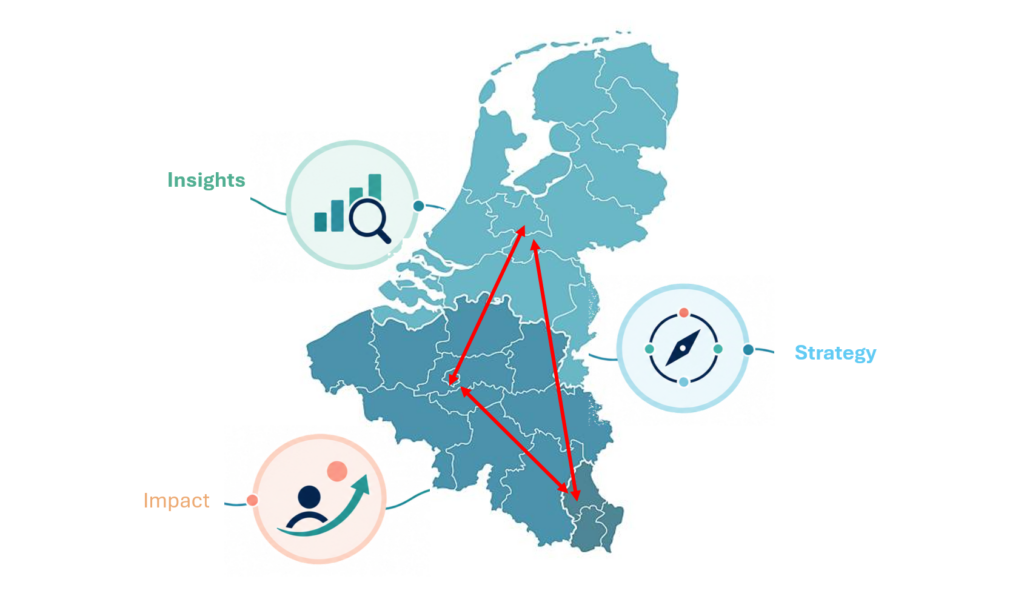
Think European. Strategise regionally. Execute nationally.
This approach recognises that European harmonisation creates a common foundation, regional cooperation creates opportunities and national execution ultimately determines reimbursement and patient access.
8. Conclusion: Collaboration as a strategic advantage
The future of pharmaceutical Market Access in the BeNeLux will be shaped by three interconnected developments.
European HTA reform is creating a more coordinated approach to clinical evidence assessment.
Beneluxa is exploring new opportunities for regional cooperation in the evaluation, pricing and reimbursement of innovative medicines.
Meanwhile, national healthcare systems continue to face increasing pressure to balance innovation, accessibility and affordability.
For pharmaceutical companies, these developments require a more integrated approach to market access planning. The traditional country-by-country model is not disappearing. Rather, it is evolving into a more complex environment in which European evidence generation, regional collaboration and national reimbursement strategies need to reinforce one another.
Ultimately, the objective remains unchanged: ensuring that patients gain timely access to innovative medicines while preserving the financial sustainability of healthcare systems.
The winners in this evolving environment will be those who understand not only the regulatory requirements, but also the clinical, economic and strategic dynamics shaping access to medicines across Europe.
Sources:
European Commission: Joint Clinical Assessments
https://eur-lex.europa.eu/legal-content/EN/TXT/?uri=CELEX:32021R2282
European Commission: HTA Implementation
Beneluxa Initiative: Statements
LISAH: Beneluxa countries identify medicines for joint price talks
RIZIV: Procedure voor opname in de terugbetalingslijst
Belgian Government: Pharmaceutical budget 2026
Zorginstituut Nederland: Lock procedure